
Creating decision advantage for defense agencies through a platform approach
Key elements for enabling data-driven decision advantage across the U.S. Defense Community.

Key elements for enabling data-driven decision advantage across the U.S. Defense Community.

The Defense Department will hold an online industry day for interested vendors May 7, issue a Request for Prototype Proposals in early June, and award contracts by mid-September, said Thomas Rondeau, the Pentagon’s director for “FutureG.”


Cybersecurity skills must evolve in near-real time as Zero Day threats continue and AI provides new challenges.

“Through this pilot collaboration with Oracle, we will harness advanced cloud and AI technologies to digitalise and transform our operations," Chief Executive of Singapore’s Defence Science and Technology Agency Ng Chad-Son said.
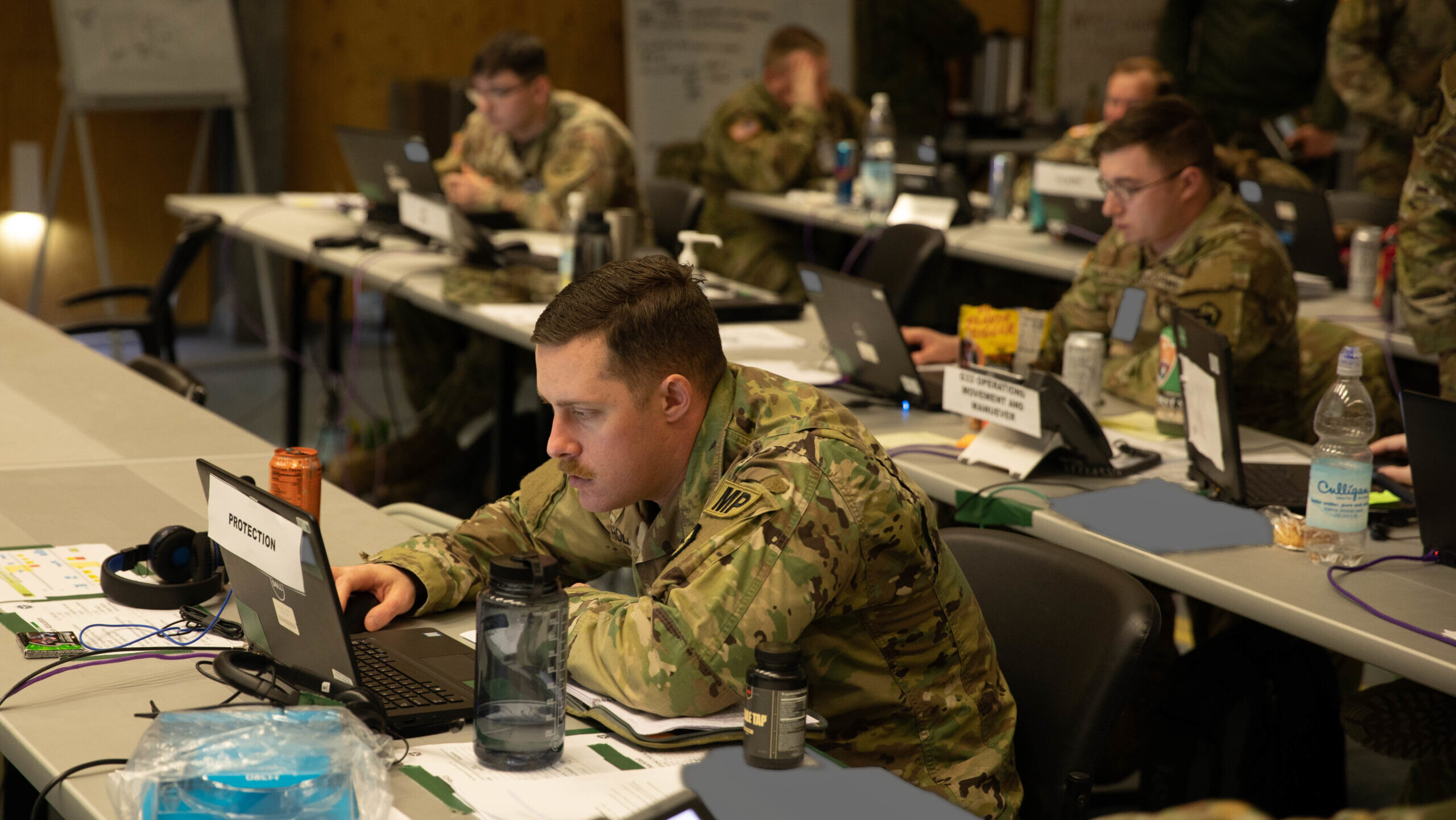
“Let’s not have a bazillion flowers blooming in this space,” said Leonel Garciga. “That gets expensive very fast, and it gets really hard to protect our data.”

The strategy introduces the NATO Digital Foundry, a project that will provide opportunities for NCIA, industry, not-for-profit organizations and other NATO stakeholders to collaborate on new technologies.

“The very fact of collocating the data in the same instance, or within the same environment or infrastructure, is very, very helpful," Manfred Boudreaux-Dehmer, NATO's CIO, said.
Michigan’s defense ecosystem and expertise makes it a special asset for production.

Lt. Col. John Hall, DISA's point man on the Pentagon's massive cloud project, told Breaking Defense that having all four cloud providers at Impact Level-6 helps prevent vendor lock and keeps the companies "honest."

“Not only would this cloud be a top secret cloud, but it would be classification agnostic as well, because the data is all tagged, because all of my users all have the correct digital identities, I can store all the data in the cloud," said Brig. Gen. Eric Vandenbeg of the Canadian Department of National Defence.

“We still buy IT as if it was a weapon system," John Hale, chief of cloud services at DISA, said, adding that he sometimes felt he's "banged [his] head against the wall."

Hypori will grant 10,000 virtual licenses across the Air Force and Space Force, after helping the Army with a somewhat bumpy IT transition of its own.


“You click a big button and in two minutes, you get one of these [high-powered computing] systems ready to go," Matthew Shaxted, co-founder and CEO of Parallel Works, told Breaking Defense of a new DIU initiative.

Inside the Pentagon, the air-gapped module will be used by the Air Force Rapid Sustainment Office (RSO) "to bring the maintenance digital ecosystem to Airmen in austere and forward deployed locations," the tech giant says.

Wiz's focus on cloud security means it would likely play a part in the DoD’s JWCC Joint Warfighting Cloud Capability initiative.

One of the hopeful uses of the new LLM is for the government to create contracts at a quicker rate.